Seed phrase security: the complete guide
Your hardware wallet can be replaced in a day. Your seed phrase cannot — it is the wallet. This guide covers everything about handling those words: where they live, where they never go, and how to prove your backup works before you need it.
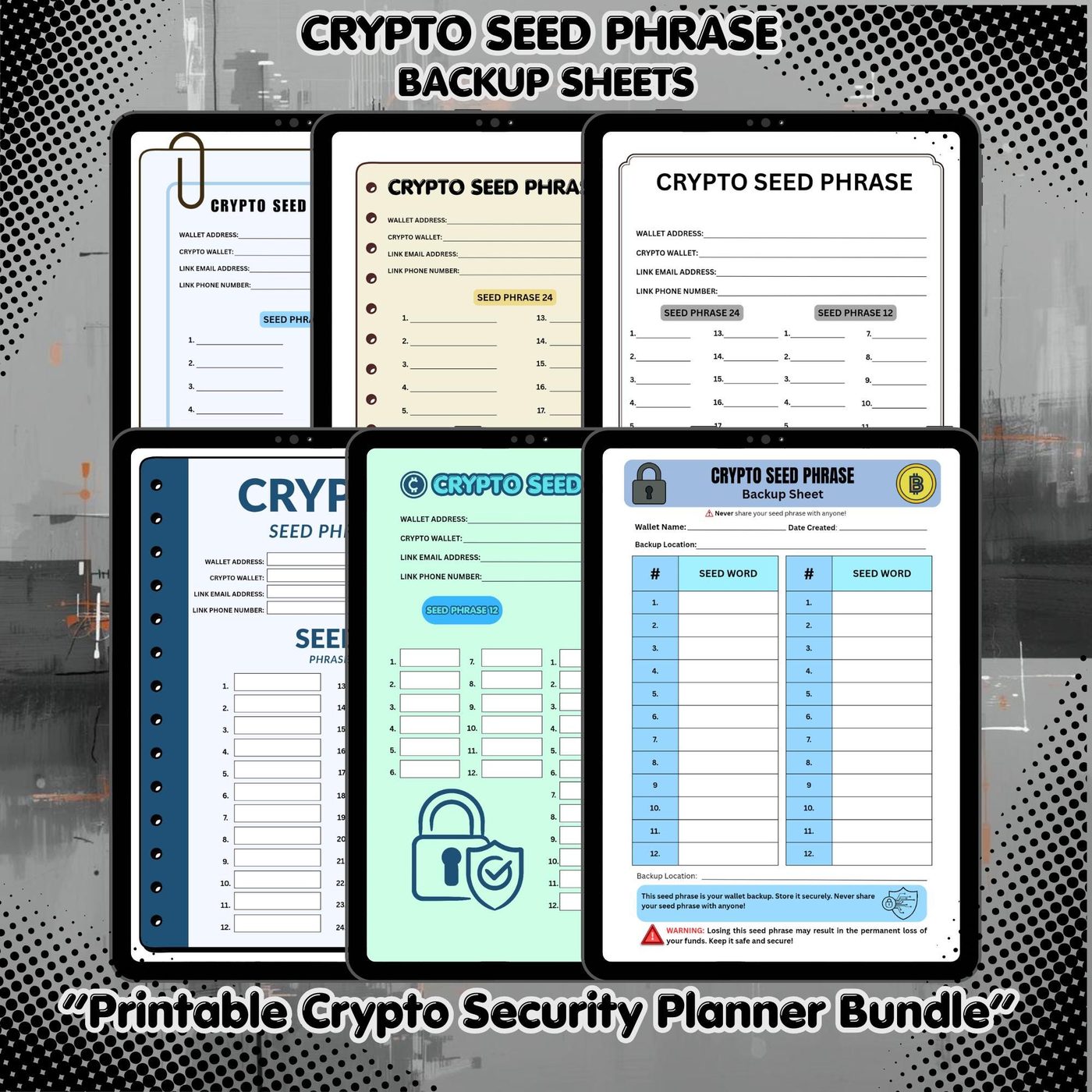
Every loss story we document eventually reaches the same junction: either the seed phrase was exposed, or it was lost. Both failures are preventable with an afternoon of care. This guide assumes you've picked a device from our hardware wallet reviews and covers the words themselves — if you want the mechanics of how twelve human words encode a cryptographic master key, read BIP-39 explained afterwards.
What the seed phrase actually is
The 12–24 words your wallet shows at setup are a human-readable encoding of a number so large that guessing it is not a computational problem but a physical one. Every private key your wallet will ever use — for every account, every chain — is derived from that single number. This has three consequences people underestimate. First, the words are the entire asset: whoever holds them holds your funds, no password, no device, no identity check required. Second, the device is disposable: any compatible wallet can restore your accounts from the words alone. Third, "my seed is safe because it's on a device that's offline" is a category error — the device is a convenience for using the seed, and the seed's own storage is a completely separate discipline.
Storage: paper, steel, and locations
The baseline is analog. Write the words by hand on paper, in order, clearly — no photos, no password manager, no cloud note, no file with a "clever" name. Paper's enemy is environment: fire, water, and time. That's why meaningful holdings justify a steel backup: stamped metal plates survive house fires, floods and decades of neglect, and a decent one costs less than a modest dinner. Devices like NGRAVE's Graphene or generic letter-stamping kits both work; what matters is the words are physically deformed into metal, not printed on it.
Location is the other half of storage. One copy is one fire away from zero. Two copies in geographically separate, privately-known locations — a home safe and a trusted person's safe, for example — survive most single-location disasters. Balance this against attack surface: every extra location and every extra person is someone else who can be tricked, robbed, or sloppy. For most people the right answer is two copies, both offline, both in places only you connect together. A bank safe-deposit box is a legitimate option for one copy; under your mattress next to the deed to the house is not a strategy, it's a label.
The passphrase: a 25th word
Most modern wallets support an optional passphrase that combines with your seed phrase to derive a completely different set of wallets. This is the strongest single upgrade available to self-custody, and it changes your threat model in two directions. Against theft: a stolen seed phrase plus your device is worthless without the passphrase, which exists only in your head. Against discovery: a small "decoy" wallet can live behind an empty passphrase while the real holdings sit behind one, so revealing a seed under coercion doesn't reveal everything.
The costs are real, though. A forgotten passphrase is as final as a forgotten seed — there is no reset, no support desk, no backdoor. The passphrase must never be stored alongside the seed, which means it needs its own memory discipline, and your succession plan (below) must account for it separately. Our recommendation: adopt a passphrase for meaningful holdings, choose words that are easy for you to reproduce under stress and impossible for anyone to guess from your public life, and rehearse recovery with it the same way you rehearse the seed.
Test the backup before you trust it
An untested backup is a hypothesis. The test takes fifteen minutes and belongs in every setup — we put it in our first-week checklist for exactly that reason. Initialize the wallet, write the seed, receive a small amount of funds. Then wipe the device completely and restore it from your written copy alone. If the accounts reappear and the balance matches, your backup works. If you discover a problem with $30 in the wallet, that's an afternoon of inconvenience; the same discovery with your life savings is a catastrophe. Repeat the test whenever you change storage — new steel plate, new location, or a new passphrase — and after any wallet firmware migration that touches recovery.
The five things that lose seed phrases
- Photographing the words. Phone photo libraries sync to clouds, get indexed by on-device AI, and leak with the phone. Every "my wallet was emptied, how?" post with a cloud-saved seed photo is the same story.
- Typing them anywhere digital. A website, an app, a browser extension "validator", a support chat. Real software never needs your seed phrase; every request for it is the attack itself — see how to spot fake crypto websites.
- Entering them on a device you can't vouch for. Seed phrases should be produced and, when necessary, entered on a hardware wallet's own screen and buttons — that's what devices like the COLDCARD Q with its built-in keyboard are for.
- Storing them with the device. The seed taped to the wallet turns one theft into a total loss. Distance between the words and the device is the whole design.
- Single point of failure. One paper copy in one drawer is one accident, one fire, one forgetful decade away from zero. Two locations, tested.
Succession: who gets access when you can't
If your holdings matter, they will outlive your memory — plan for incapacity, not just death. The blunt instrument is a sealed letter with the seed stored where your executor already stores what matters, with clear instructions. The refined instruments are Shamir backup shares (supported by the Trezor Safe series), which split recovery into pieces that recombine only when a threshold of them are brought together, and multisig setups that require multiple devices or people to spend. Whatever you choose, the plan must be testable by the person who'll execute it and documented without exposing itself — a letter that names where the steel plate is, not one that carries the words themselves. Revisit it yearly, the way you'd revisit a will, because wallets, addresses and families all move.
Nobody has ever regretted testing their recovery phrase. Plenty of people have regretted discovering during an emergency that the paper said 23 words and they'd never counted.
Curious what those words mathematically are? BIP-39 explained walks from raw entropy to keys. Choosing a device that handles seeds well? Start with the tested wallets.